enfrdezh-cnitesru
Introduction to Mauritius
Back to all chapters

Chapter 01 · The Mauritius Relocation Roadmap

Introduction to Mauritius

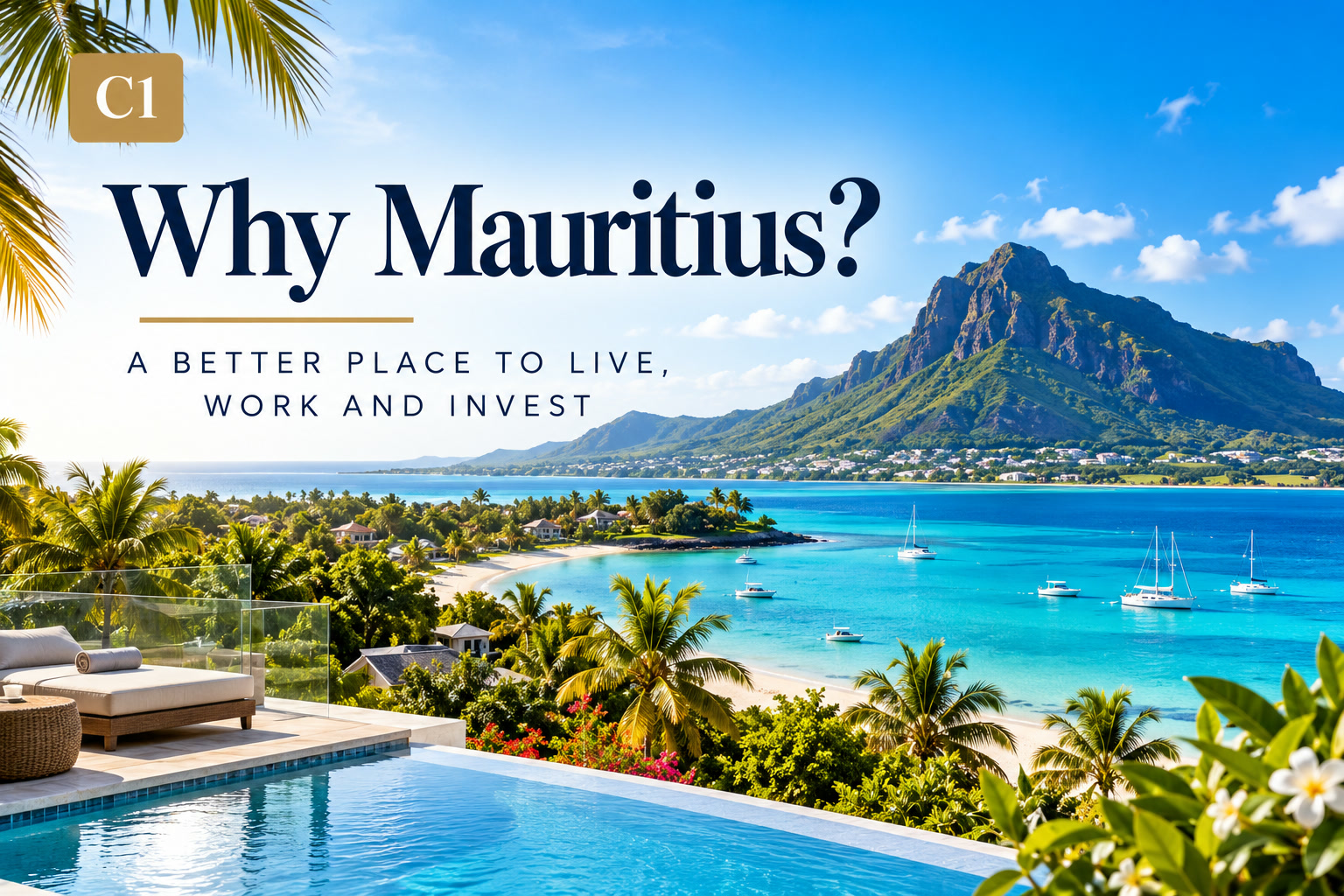
Why Mauritius? Your complete introduction to living, working and investing on the island.

Chapter opening Opening — Why Mauritius? Your Complete Introduction to Living, Working & Investing in Mauritius

Published by

LiveWorkInvest.mu Operated by Varemont Private Limited

Opening Quote

“The first step in relocating to Mauritius is not booking a flight—it's understanding whether the island truly aligns with the life you want to build.”

Executive Summary

Every year, thousands of individuals, families, entrepreneurs and retirees begin searching for a place that offers more than a different climate or a lower cost of living. They are looking for stability, opportunity, security and a better quality of life. Increasingly, that search leads them to Mauritius.

Often described as the 'Star and Key of the Indian Ocean', Mauritius has quietly established itself as one of the world's most attractive relocation destinations. While many first discover the island through its turquoise lagoons and white sandy beaches, those who choose to make it their home soon realise that its greatest strengths lie far beyond its natural beauty.

Today, Mauritius is recognised for its stable democracy, well-regulated financial system, strategic location between Africa and Asia, multicultural society and growing international business environment. It offers an attractive combination of economic opportunity and lifestyle, making it appealing to entrepreneurs, professionals, investors, retirees and families seeking a fresh start.

Relocating, however, is about far more than choosing a destination. It is about choosing the environment in which you want to build the next chapter of your life. Every relocation involves important decisions about residency, education, healthcare, employment, taxation, property, family wellbeing and long-term financial planning. A successful move begins with understanding not only what a country offers, but whether those opportunities genuinely align with your own goals and aspirations.

This guide has been created to help you answer that question.

Unlike many relocation resources that focus on only one aspect of moving abroad, The Mauritius Relocation Roadmap provides a comprehensive overview of the practical, financial and lifestyle considerations involved in relocating to Mauritius. It has been designed to help you understand the island before you begin comparing residency options, exploring property opportunities or making financial commitments.

Throughout this chapter, we will examine why Mauritius has become an increasingly popular destination for international relocation. We will explore the country's economic development, political stability, healthcare, education system, business environment, lifestyle, infrastructure and overall quality of life. We will also address common misconceptions, highlight practical considerations and help you evaluate whether Mauritius is the right destination for your particular circumstances.

Our objective is not to persuade you that Mauritius is the perfect destination. No such place exists.

Instead, our objective is to provide balanced, practical and reliable information that enables you to make one of life's most important decisions with confidence.

Whether you are considering relocating your family, establishing a business, investing internationally or planning your retirement, we hope this guide becomes a trusted companion throughout your journey.

Welcome to The Mauritius Relocation Roadmap. Your journey begins here.

Why This Guide Is Different

There is no shortage of articles about Mauritius.

A quick online search will return thousands of results promising to reveal 'everything you need to know' about moving to the island. Many highlight its beaches, favourable climate or attractive tax environment. Others focus exclusively on residency permits, luxury property developments or investment opportunities.

While each provides part of the picture, very few present the complete story.

Relocation is not a transaction. It is a life decision.

The questions that matter most are rarely answered by promotional brochures or short online articles.

Will my children receive a good education?

What is healthcare really like?

Can I successfully run my business from Mauritius?

Is the island suitable for retirement?

How expensive is everyday life?

Will I integrate into the local community?

What challenges should I realistically expect?

These are the questions that determine whether a relocation becomes a success.

This publication has therefore been written with one guiding principle:

To provide clear, balanced and practical information that helps readers make informed decisions—not emotional ones.

Where appropriate, we reference official government publications and recognised institutions. We also draw upon practical relocation experience and the questions most frequently asked by individuals and families considering a move to Mauritius.

Our aim is to become the most trusted independent resource on living, working and investing in Mauritius.

💡 Did You Know?

Mauritius consistently ranks among Africa's leading countries for governance, ease of doing business, economic freedom and quality of institutions. While rankings change from year to year, the country's long-standing reputation for political stability and regulatory transparency has been one of the key drivers of its international appeal.

🇲🇺 Mauritius Insight

Most people first discover Mauritius because of its scenery.

Most people decide to stay because of its lifestyle.

The difference between visiting Mauritius and living in Mauritius is one of the central themes of this guide. Throughout the chapters ahead, we will explore not just what makes the island beautiful, but what makes it a practical and rewarding place to call home.

✅ Varemont Private Perspective

At LiveWorkInvest.mu, we believe that the best relocation decisions are informed decisions.

Our role is not to convince you to move to Mauritius. Our role is to help you understand the opportunities, responsibilities and realities of life on the island so that, whatever decision you make, you make it with confidence.

Coming Next

Section 1: Why Mauritius Matters – More Than Just a Tropical Island

This section explores why Mauritius has become one of the world's most respected relocation destinations, blending its history, geography, political evolution and global relevance into a compelling narrative.

Continue to Why Mauritius Matters – More Than Just a Tropical Island
Section 2 Why Mauritius Matters – More Than Just a Tropical Island

For many people, Mauritius first appears as a destination on a holiday brochure—a tropical island surrounded by turquoise lagoons, white sandy beaches and swaying palm trees. It is a place associated with luxury resorts, honeymoons and idyllic escapes from everyday life. While those images are undeniably part of Mauritius's identity, they tell only a small part of the story.

The Mauritius that international visitors experience during a week-long holiday is very different from the Mauritius that more than 1.3 million people call home. Behind the postcard scenery lies a modern, ambitious and internationally connected nation that has spent decades building one of Africa's most stable economies and one of the Indian Ocean's most respected business environments.

Understanding this distinction is essential for anyone considering relocation.

Moving to another country is not about choosing the most beautiful destination. It is about choosing the environment in which you will work, educate your children, access healthcare, build a business, invest your savings and create a future. The true value of Mauritius lies not simply in its natural beauty but in the combination of political stability, economic resilience, personal safety and quality of life that few countries of similar size have achieved.

Mauritius occupies a unique position on the world map. Located in the south-west Indian Ocean, approximately 2,000 kilometres off Africa's eastern coastline, the island sits at the crossroads of Africa, Asia and the Middle East. This strategic location has shaped its history for centuries. Once an important maritime waypoint for European trading routes, Mauritius has evolved into a regional gateway connecting international investors and businesses with emerging African markets while maintaining strong commercial ties with Europe and Asia.

Geography alone, however, does not explain Mauritius's success.

Many island nations possess beautiful coastlines and favourable climates. Few have achieved the level of political continuity, institutional strength and economic diversification that Mauritius enjoys today.

Following independence in 1968, Mauritius faced considerable uncertainty. At the time, its economy relied heavily on sugar production, unemployment was high and many international observers questioned whether such a small island with limited natural resources could sustain long-term economic growth.

Rather than accepting those limitations, successive governments pursued policies focused on education, industrial development, international trade and institutional stability. Over the following decades, Mauritius successfully diversified into textiles, tourism, financial services, information and communication technology, higher education, logistics and professional services. More recently, the country has invested in renewable energy, fintech, digital innovation and the ocean economy as part of its long-term national development strategy.

This transformation is widely recognised as one of Africa's most significant economic success stories.

Today, Mauritius consistently attracts multinational companies, entrepreneurs, investors and skilled professionals seeking a jurisdiction that combines political stability with international connectivity. Its legal system, based on a blend of French Civil Law and English Common Law traditions, provides a familiar framework for many international businesses. Combined with a transparent regulatory environment and an extensive network of double taxation agreements and investment treaties, Mauritius has established itself as a respected international financial centre serving both regional and global markets.

Yet economics tells only part of the story.

Ask long-term residents why they remain in Mauritius and their answers often extend far beyond business opportunities or taxation. They speak about feeling safe walking through their neighbourhoods, spending weekends outdoors with family, enjoying shorter commuting times than in many global cities and living within a multicultural society where diversity is part of everyday life rather than an exception.

This balance between professional opportunity and personal wellbeing has become one of Mauritius's defining characteristics.

In many developed economies, career progression often comes at the expense of personal time. Long commutes, high levels of stress and rising living costs can reduce the quality of everyday life despite attractive salaries. Mauritius presents a different proposition. While no country is without challenges, many residents find that the island offers a more sustainable balance between work, family and leisure.

Parents appreciate the availability of international schools and the opportunity for children to grow up in a relatively safe environment. Entrepreneurs value the accessibility of government agencies and the ease of building professional networks within a compact business community. Retirees enjoy an active outdoor lifestyle supported by a warm climate throughout much of the year. Remote workers increasingly recognise that reliable digital infrastructure and global connectivity allow them to enjoy an exceptional quality of life without sacrificing international careers.

Importantly, Mauritius is not attempting to become another Dubai, Singapore or Monaco. Instead, it has developed its own identity—one that combines African dynamism, European institutions and Asian commercial influence within a uniquely multicultural island society.

This identity is reflected in everyday life. English is the official language of government, French is widely spoken in business and the media, while Mauritian Creole serves as the common language of daily conversation. Hindu temples, churches, mosques and Chinese pagodas often exist within the same communities, reflecting a tradition of religious tolerance that has become one of the country's defining social strengths.

For newcomers, this multicultural environment often makes integration easier than expected. Rather than expecting newcomers to conform to a single cultural identity, Mauritian society has evolved around coexistence, respect and adaptation.

Of course, relocating to Mauritius is not without compromise. Salaries in certain industries may be lower than those in Europe or North America. Public transport continues to evolve, and the pace of island life requires patience from those accustomed to larger metropolitan centres. Some specialised goods can be more expensive due to import costs, and professional opportunities remain concentrated within particular sectors.

These realities deserve equal attention.

Throughout this guide, we will discuss both the advantages and the limitations of living in Mauritius because informed decisions require balanced information, not marketing language.

Ultimately, the question is not whether Mauritius is a beautiful country. That answer is obvious. The more important question is whether Mauritius offers the environment in which you and your family can build the future you envision. For a growing number of people from around the world, the answer is yes.

Did You Know?

Despite covering just over 2,000 square kilometres, Mauritius has developed into one of Africa's leading financial and business hubs, connecting markets across Africa, Europe, Asia and the Middle East.

Mauritius Insight

Mauritians often describe their island not by its beaches, but by its people. The country's multicultural society and tradition of coexistence are among its greatest strengths.

Varemont Private Perspective

One of the biggest misconceptions we encounter is that people relocate to Mauritius because of its beaches. In reality, successful relocations happen because people relocate for the life they want to create. The beaches attract attention; stability, safety, opportunity and quality of life are what encourage people to stay.

Continue to A Small Island with Global Ambitions
Section 3 A Small Island with Global Ambitions

Few countries have transformed themselves as dramatically as Mauritius.

Today, the Republic of Mauritius is internationally recognised as one of Africa's most politically stable democracies, a respected international financial centre and a gateway between Africa and Asia. Yet only a few decades ago, the outlook was far less certain.

When Mauritius gained independence from Britain on 12 March 1968, many experts questioned whether such a small island nation could survive as an independent state. With limited natural resources and an economy heavily dependent on sugar exports, the prospects appeared uncertain. History would prove them wrong.

Rather than allowing its geographic limitations to define its future, Mauritius adopted a long-term strategy centred on education, economic diversification, institutional strength and international cooperation. Over the following decades, successive governments invested in creating a resilient economy capable of adapting to changing global markets.

For much of its early history, sugar was the backbone of the Mauritian economy. Recognising the risks of dependence on a single industry, the country gradually diversified into textiles, tourism, financial services, ICT, logistics, education, healthcare, renewable energy and the ocean economy.

Political stability has become one of Mauritius's greatest competitive advantages. Regular democratic elections, an independent judiciary and predictable institutions provide confidence for families, entrepreneurs and investors considering a long-term future on the island.

The country's mixed legal system, combining French Civil Law and English Common Law, offers a familiar framework for many international businesses and supports commercial certainty.

Mauritius also plays an active role internationally through organisations such as the African Union, SADC, COMESA, the Commonwealth, the United Nations and the World Trade Organization, strengthening its position as a gateway between Africa and global markets.

Looking ahead, Mauritius continues investing in digital transformation, financial technology, renewable energy, smart cities, innovation and the blue economy. This forward-looking approach reflects a national ambition to remain competitive in a rapidly changing global economy.

For anyone considering relocation, these foundations matter. Choosing a country is not simply about today's lifestyle but about confidence in its future. Mauritius has demonstrated an ability to adapt, evolve and plan for the long term.

Did You Know?

Mauritius is widely recognised as one of Africa's strongest examples of successful economic diversification.

Mauritius Insight

Education, resilience and adaptability are frequently cited by Mauritians as the foundations of the country's success.

Common Mistake

Many visitors assume Mauritius depends only on tourism. In reality, the economy is supported by multiple sectors including finance, ICT, manufacturing and professional services.

Varemont Private Perspective

Long-term planning is one of Mauritius's greatest strengths. That stability gives newcomers confidence when making life-changing relocation decisions.

Continue to Understanding Mauritius Today – Economy, Industries & Opportunities
Section 4 Understanding Mauritius Today – Economy, Industries & Opportunities

When people first think of Mauritius, the images that come to mind are usually beaches, luxury resorts and turquoise lagoons. While tourism has undoubtedly played an important role in the country's development, it represents only one chapter in a much larger story.

Modern Mauritius is a diversified economy built on resilience, innovation and international connectivity. Over the past five decades, the country has deliberately transformed itself from an agricultural economy into one that competes across multiple high-value industries. This diversification has strengthened economic stability while creating opportunities for businesses, investors and skilled professionals.

For anyone considering relocating, understanding how the Mauritian economy functions is essential. Economic strength influences employment prospects, investment confidence, infrastructure development and long-term quality of life.

A Diversified Economic Model

Today, Mauritius benefits from a broad economic base rather than relying on a single industry. Key sectors include:

  • Financial Services
  • Global Business
  • Tourism and Hospitality
  • Information and Communication Technology (ICT)
  • Manufacturing
  • Real Estate Development
  • Professional Services
  • Higher Education
  • Healthcare
  • Logistics and Maritime Services
  • Agriculture and Agri-business
  • Renewable Energy

Financial Services – A Regional Gateway

Mauritius has developed into one of Africa's leading international financial centres, supported by a well-regulated banking system, experienced professional services and international connectivity.

Tourism – More Than Luxury Resorts

Tourism remains a vital industry, but today it extends beyond luxury holidays to include eco-tourism, wellness, culture, gastronomy, marine activities and business events.

Technology and Digital Innovation

Investment in fibre connectivity, fintech, cybersecurity, software development, business process outsourcing and smart cities has strengthened Mauritius's digital economy.

Entrepreneurship and Business

A transparent legal framework, accessible professional advisers and a compact business community create a supportive environment for entrepreneurs.

Property and Real Estate

Carefully regulated property schemes have attracted international buyers while supporting economic development and new residential communities.

Manufacturing and Export Industries

Manufacturing remains important, particularly textiles, food production, medical products, seafood processing, jewellery and precision industries.

The Blue Economy

Mauritius is investing in marine resources, aquaculture, ocean research, maritime logistics and sustainable development as part of its long-term strategy.

Looking Ahead

Mauritius continues investing in education, innovation, sustainability and digital transformation to remain competitive in the decades ahead.

Did You Know?

Mauritius has repeatedly reinvented its economy—from sugar to textiles, tourism, financial services and now digital innovation and the blue economy.

Mauritius Snapshot

  • Financial Services
  • Global Business
  • Tourism
  • ICT & Digital Economy
  • Manufacturing
  • Real Estate
  • Logistics
  • Professional Services
  • Higher Education
  • Healthcare
  • Renewable Energy
  • Blue Economy

Common Mistake

Many prospective residents believe employment opportunities are limited because Mauritius is a small island. In reality, opportunities exist across many industries, particularly for specialists, entrepreneurs and internationally connected professionals.

Varemont Private Perspective

The strongest economies continue to evolve. Mauritius has consistently demonstrated a willingness to diversify, innovate and invest in the future—an encouraging sign for anyone planning a long-term relocation.

Continue to Why People Choose Mauritius
Section 5 Why People Choose Mauritius

Understanding the Motivations Behind Relocating to the Island

Every relocation begins with a question.

Sometimes it is asked quietly during a stressful commute home after another long day at work. Sometimes it follows a major life event—a new child, retirement, a career opportunity or the sale of a business. For others, it emerges gradually after years of wondering whether there might be a better way to live.

Regardless of the circumstances, the question is remarkably similar: "Could life be better somewhere else?"

For an increasing number of people, Mauritius becomes part of that conversation. Not because it promises perfection, but because it offers a rare combination of political stability, economic opportunity, personal safety, natural beauty, multiculturalism and an enviable quality of life.

The reasons people relocate to Mauritius are as diverse as the people themselves. Some arrive with ambitious business plans. Others come seeking a quieter retirement. Many simply want to raise their children in a safer, healthier environment.

Understanding these motivations is important because successful relocation is rarely about choosing the 'best' country. It is about choosing the country that best supports your goals, values and lifestyle.

Families Seeking a Better Quality of Life

Parents increasingly seek a safer environment, more time together and access to quality education. Mauritius offers relatively short commuting times, outdoor living, multicultural communities and internationally recognised schools, allowing many families to enjoy a healthier work-life balance.

Entrepreneurs Looking for Opportunity

Entrepreneurs are attracted by Mauritius's transparent business environment, strategic location, professional services sector and accessible business community. Building relationships is often easier in a compact economy where networks are close and decision-makers are more accessible.

Professionals Seeking Balance

Many professionals now value wellbeing as highly as salary. Mauritius offers an appealing balance between career opportunities, outdoor living, family time and a slower pace of life.

Remote Workers and Digital Professionals

Reliable fibre connectivity, international air links and a pleasant lifestyle have made Mauritius increasingly attractive to remote workers, consultants, freelancers and digital entrepreneurs serving clients around the world.

Investors Looking Beyond Traditional Markets

Mauritius attracts investors seeking long-term stability, access to African markets, modern financial services and a predictable legal framework.

Retirees Choosing Lifestyle Over Pace

Many retirees are drawn by the warm climate, active outdoor lifestyle, quality healthcare and relaxed pace of life. Retirement in Mauritius is often about enjoying life more fully rather than slowing down.

A Society Built on Diversity

Mauritius is one of the world's most multicultural societies. Different cultures, religions and languages coexist harmoniously, making integration easier for many newcomers.

It's About More Than Lifestyle

Beyond its climate and scenery, Mauritius offers something increasingly valuable: a way of life that encourages people to balance professional success with family, health and personal wellbeing.

Did You Know?

International surveys consistently show that quality of life, safety, healthcare, education and work-life balance are among the strongest drivers of international relocation decisions.

Mauritius Insight

Many long-term expatriates say the friendliness of local communities and the ease of building personal relationships are among the island's greatest strengths.

Common Mistake

Relocation changes your environment—it does not automatically solve every challenge. Successful relocations depend on realistic expectations and a willingness to adapt.

Varemont Private Perspective

The happiest people we meet rarely stay because of the beaches alone. They stay because Mauritius allows them to build a life with more balance, stronger relationships and a greater sense of wellbeing.

Continue to Lifestyle in Mauritius
Section 6 Lifestyle in Mauritius

What Everyday Life Really Looks Like

The decision to relocate is rarely based on economics alone.

Employment opportunities, taxation and residency options are undoubtedly important, but once the paperwork has been completed and the boxes unpacked, everyday life becomes what truly matters.

What does a typical weekday feel like? How do weekends differ from those back home? Will you enjoy living there not just for a month, but for years? These are the questions that ultimately determine whether a relocation becomes a success.

For many expatriates, one of Mauritius's greatest strengths is that life feels more intentional. Rather than constantly rushing from one commitment to the next, people often discover a rhythm that allows professional ambition and personal wellbeing to coexist.

This slower pace should not be mistaken for a lack of productivity. Mauritius is a modern economy with active businesses, international financial institutions and a growing technology sector. The difference lies in the balance. Life is often measured less by how busy you are and more by how well you are living.

A Climate That Encourages Outdoor Living

Mauritius enjoys a tropical climate that supports outdoor living throughout most of the year. Residents spend time walking along the coast, hiking, cycling, golfing and enjoying beaches with family and friends. Summer generally runs from November to April, while winter from May to October remains pleasantly mild, encouraging an active lifestyle year-round.

Work-Life Balance

Many residents find that shorter commuting times allow them to spend more time with family, pursue hobbies and enjoy the outdoors. Quality of life is often improved through these small daily changes rather than dramatic lifestyle shifts.

A Multicultural Society

Mauritius brings together people of Indian, African, Chinese and European heritage in a society built on coexistence and mutual respect. Religious and cultural diversity is reflected in everyday life.

Languages

English is the official language, French is widely spoken in business and the media, and Mauritian Creole is the language of everyday conversation. Learning a few Creole phrases often helps newcomers integrate more quickly.

Food and Dining

Mauritian cuisine combines Indian, Chinese, African, French and Creole influences. Local favourites include dholl puri, farata, gateaux piments, boulettes, mine frite, seafood dishes and tropical fruit, alongside a growing range of international restaurants.

Leisure and Recreation

Popular activities include swimming, sailing, diving, snorkelling, surfing, paddleboarding, golf, hiking, cycling, yoga and fitness. Cultural events, museums, theatres and festivals also contribute to island life.

Community

Many newcomers are surprised by the strong sense of community. Neighbours, local businesses and professional contacts often develop into lasting personal relationships.

Everyday Practicalities

Island living requires flexibility. Imported products can take longer to arrive, and some administrative processes may move at a different pace. Those who embrace local culture generally adapt most successfully.

It's the Little Things

Long-term residents often remember everyday moments—family dinners, beach walks, outdoor breakfasts and evenings with friends—as the real reasons they love living in Mauritius.

Did You Know?

Mauritius observes public holidays from several major religions, reflecting the country's multicultural heritage.

Mauritius Insight

Greeting someone with 'Bonzour' in Mauritian Creole is a simple gesture that is often warmly appreciated.

Common Mistake

Do not expect Mauritius to operate exactly like a large global city. Adapting to the island's own pace is part of a successful relocation.

Varemont Private Perspective

The greatest luxury in Mauritius is often not the scenery but the opportunity to enjoy a balanced, comfortable and fulfilling everyday life.

Continue to Healthcare & Wellbeing
Section 7 Healthcare & Wellbeing

Understanding Medical Care in Mauritius

One of the greatest concerns people have when considering relocation is often one of the most personal.

"If something happens to me or my family, will we receive good healthcare?"

It is an understandable question. Regardless of lifestyle, climate or financial opportunity, few factors influence quality of life more than confidence in a country's healthcare system.

Fortunately, Mauritius offers a healthcare system that combines publicly funded medical services with a well-developed private healthcare sector, giving residents access to a broad range of medical care depending on their individual needs and preferences.

Like every country, the Mauritian healthcare system has strengths and limitations. Understanding both is essential for anyone planning a permanent or long-term move.

A Dual Healthcare System

Mauritius operates a dual healthcare model consisting of public healthcare and private healthcare. Many expatriates choose to use both systems depending on their needs, balancing convenience with cost and access.

Public Healthcare

The public healthcare system provides hospitals, regional health centres, community clinics, emergency treatment, maternity services, surgery and specialist care. Eligible residents can access many services without direct charges at the point of treatment, although waiting times for non-emergency procedures may vary.

Private Healthcare

Private hospitals and clinics provide faster access to consultations, diagnostics, surgery and specialist treatment. Many expatriates choose private healthcare for shorter waiting times and additional comfort.

Medical Professionals

Many doctors practising in Mauritius have received postgraduate training overseas, and English and French are widely used in medical settings.

Pharmacies and Medication

Pharmacies are readily available throughout the island. Prescription medicines and many over-the-counter treatments are easily accessible, although some international brands may differ.

Medical Insurance

Many expatriates maintain private medical insurance to access private hospitals, specialist care, international evacuation and broader treatment options.

Emergency Medical Services

Emergency care is available through public and private hospitals, supported by ambulance services across the island.

Wellbeing Beyond Healthcare

Mauritius encourages healthy living through outdoor recreation, fresh food, year-round activity and a climate that supports an active lifestyle.

A Balanced Perspective

No healthcare system is perfect. Mauritius combines accessible public healthcare with expanding private facilities, giving many relocating families confidence in the medical care available.

Did You Know?

Mauritius has invested significantly in modernising both its public and private healthcare systems over recent decades.

Mauritius Insight

Many newcomers are pleasantly surprised by how quickly they can arrange appointments with private doctors and specialists.

Common Mistake

Travel insurance is not a substitute for comprehensive health insurance once you become a long-term resident.

Varemont Private Perspective

Healthcare is only one part of wellbeing. The greatest long-term benefit of living in Mauritius is often the healthier lifestyle that the island naturally encourages.

Continue to Education & Raising a Family in Mauritius
Section 8 Education & Raising a Family in Mauritius

Why Families Are Choosing Mauritius for the Next Generation

For many people considering relocation, the decision is not primarily about themselves. It is about their children.

Parents naturally ask difficult questions before moving to another country: Will my children receive a good education? Will they make friends? Will they adapt? Will they have opportunities to attend leading universities? Will they be safe?

Mauritius has developed an education system that serves both local families and an increasingly international population. Combined with safe communities, a multicultural society and a family-oriented lifestyle, the island has become an attractive destination for parents.

Education in Mauritius combines strong academic traditions with an expanding range of international schools, private institutions and higher education opportunities.

A Strong Educational Tradition

Education has long been a national priority. Mauritius has invested heavily in literacy, school access and educational quality, resulting in one of the highest literacy rates in Africa.

Public Education

Eligible students have access to free public primary and secondary education. English is the official language of instruction, with French widely used and Mauritian Creole spoken in everyday life.

Private and International Schools

Many expatriate families choose private or international schools offering Cambridge International, International Baccalaureate (IB), French and other internationally recognised curricula.

Language Learning

Children often grow up speaking English, French and Mauritian Creole, giving them valuable multilingual skills from an early age.

Higher Education

Mauritius offers universities, specialist institutes and international partnerships across a wide range of academic disciplines. Many graduates also continue their studies overseas.

Life Outside the Classroom

Children benefit from sport, music, arts, environmental activities and year-round outdoor recreation, supporting balanced personal development.

Safety and Family Life

Family-oriented communities and a relatively peaceful environment are among the reasons many parents choose Mauritius.

Supporting Children Through Relocation

Preparing children, involving them in the move and encouraging participation in local activities helps them adapt successfully.

A Long-Term Investment

Choosing where children grow up influences not only education but also confidence, wellbeing, cultural awareness and future opportunities.

Did You Know?

Mauritius has one of the highest literacy rates in Africa, reflecting sustained investment in education.

Mauritius Insight

International schools often have highly diverse student bodies, exposing children to classmates from around the world.

Common Mistake

Waiting until arrival to apply for international schools can limit options because popular year groups may fill quickly.

Varemont Private Perspective

The best education decision is not simply choosing the right school, but choosing an environment where children can thrive academically, socially and personally.

Continue to Housing & Finding the Right Place to Live
Section 9 Housing & Finding the Right Place to Live

Choosing a Home That Matches Your Lifestyle

Finding the right home is about far more than choosing a property. It is about choosing a lifestyle.

The neighbourhood you select will influence your daily commute, your children's school journey, your access to healthcare, your social life, your leisure activities and, ultimately, how you experience Mauritius every day.

Mauritius offers a remarkable variety of living environments within relatively short travelling distances, allowing residents to choose a setting that matches their priorities.

Renting Before Buying

Many newcomers benefit from renting first. This allows time to understand neighbourhoods, commuting patterns, schools and the property market before making a long-term commitment.

Coastal Living

Coastal communities offer beaches, marinas, restaurants, golf courses and water sports. They provide an exceptional lifestyle but often come with higher property prices and increased maintenance.

Inland Living

Central and inland regions offer cooler temperatures, larger homes, convenient access to business centres, schools, healthcare and shopping, often at better value.

Northern Mauritius

The north is popular with expatriates thanks to vibrant communities, international amenities, marinas, restaurants and an active social scene.

Western Mauritius

The west attracts residents seeking sunsets, surfing, golf, hiking and modern residential developments close to nature.

Central Mauritius

Moka, Ebene and Curepipe are popular with professionals because of their proximity to business districts, universities and essential services.

Eastern and Southern Mauritius

These regions provide quieter lifestyles, beautiful scenery and a stronger connection with nature, making them attractive for those seeking peace and privacy.

Apartments, Villas and Gated Communities

Mauritius offers apartments, villas, townhouses, golf estates, marina residences and gated communities with security and shared amenities.

Understanding Housing Costs

Housing costs vary by location, property type and proximity to the coast. Buyers and tenants should also budget for utilities, insurance, maintenance and management fees.

Choosing the Right Neighbourhood

The ideal location depends on your own priorities, whether that is family life, business, retirement or lifestyle.

Making Mauritius Feel Like Home

A sense of belonging develops over time through neighbours, routines, favourite places and community connections.

Did You Know?

Because Mauritius is relatively compact, many residential areas are within an hour's drive of one another.

Mauritius Insight

Many newcomers initially favour beachfront living but later choose neighbourhoods closer to schools, workplaces and everyday amenities.

Common Mistake

Buying immediately after arrival without exploring different regions can lead to a property that does not suit your long-term lifestyle.

Varemont Private Perspective

The right home is not simply the most impressive property—it is the one that best supports the life you want to build in Mauritius.

Continue to The Cost of Living in Mauritius
Section 10 The Cost of Living in Mauritius

Understanding Everyday Expenses and Planning Your Budget

One of the first questions almost every prospective resident asks is simple: 'Can I afford to live in Mauritius?'

The answer depends less on Mauritius itself than on the lifestyle you intend to enjoy.

Mauritius offers flexibility across a broad range of budgets, allowing many people to find a balance between comfort and affordability.

Understanding where your money is likely to be spent helps you plan realistically and relocate with confidence.

Housing

Accommodation is usually the largest monthly expense. Costs vary according to location, property size, quality, proximity to the coast, security, furnishings and available amenities. Many newcomers rent before buying.

Utilities

Typical household utilities include electricity, water, internet, mobile services and gas where applicable. Electricity usage depends heavily on air-conditioning and household size.

Groceries

Local markets and supermarkets offer a wide range of products. Locally produced goods often represent excellent value, while imported products generally cost more.

Dining Out

Mauritius offers everything from affordable street food and cafés to fine dining and luxury resort restaurants, making it easy to match spending to your budget.

Transportation

Budgeting should include fuel, vehicle ownership, insurance, taxis or public transport depending on your lifestyle. Shorter commuting distances can help reduce travel costs.

Healthcare

Healthcare expenses vary according to whether you use public services, private providers or comprehensive medical insurance.

Education

Families should budget for tuition where applicable, as well as uniforms, books, transport, extracurricular activities and other school-related costs.

Entertainment and Leisure

Many leisure activities such as beaches, hiking and community events are free or inexpensive, while golf, marinas and private clubs require higher discretionary spending.

Building a Realistic Budget

Separate one-off relocation expenses from ongoing monthly living costs to make long-term financial planning easier.

Looking Beyond the Numbers

The true value of living in Mauritius includes lifestyle, wellbeing, shorter commutes and access to nature—not simply the monthly cost of living.

Did You Know?

Many residents combine local markets with supermarkets to balance freshness, variety and value.

Mauritius Insight

Imported goods may cost more, but many everyday lifestyle benefits can more than compensate for higher prices in selected categories.

Common Mistake

People often underestimate one-off relocation expenses such as deposits, shipping, insurance, legal fees and furnishing a new home.

Varemont Private Perspective

The goal is not to find the cheapest place to live but to create a lifestyle that fits your budget and supports your long-term goals.

Continue to Living Like a Local: Culture, Customs & Community
Section 11 Living Like a Local: Culture, Customs & Community

Building a Life Beyond Relocation

Relocating to a new country involves much more than finding a home, opening a bank account or obtaining the correct residency permit.

The greatest challenge—and often the greatest reward—is learning how to become part of a new community.

Mauritius is a country where relationships matter. Courtesy, respect and genuine human connection are deeply valued, making cultural integration one of the keys to a successful relocation.

A Truly Multicultural Nation

Mauritius brings together African, Indian, Chinese and European influences in a society where diversity is part of everyday life. Different cultures, languages and religions coexist harmoniously.

The Importance of Respect

Simple courtesies, warm greetings and respect for others are highly appreciated in both social and professional settings.

Languages in Everyday Life

English is the official language, French is widely spoken and Mauritian Creole is the language most commonly heard in daily life. Learning a few Creole expressions is often warmly appreciated.

Festivals That Bring the Island Together

Mauritius celebrates festivals from multiple faiths and cultures, creating opportunities for communities to share traditions and strengthen social bonds.

Food as a Social Experience

Meals are an important part of Mauritian hospitality. Sharing food with neighbours, friends and colleagues often becomes the foundation of lasting relationships.

Business Etiquette

Business culture combines professionalism with relationship-building. Punctuality, courtesy and trust are valued throughout the business community.

Becoming Part of the Community

Joining clubs, volunteer organisations, sports groups and community events is one of the easiest ways to build friendships and integrate successfully.

Understanding Island Time

Life often moves at a gentler pace than in major global cities. Patience and flexibility help newcomers adapt to the island's rhythm.

Building a Sense of Belonging

Feeling at home develops gradually through everyday routines, friendships, familiar places and active participation in the local community.

Did You Know?

Mauritius officially recognises public holidays from several different religions, reflecting its remarkable multicultural heritage.

Mauritius Insight

Greeting people with a smile and a simple 'Bonzour' often creates a positive first impression and helps build local connections.

Common Mistake

Limiting yourself to expatriate communities can slow integration. Building relationships with Mauritian neighbours and colleagues creates a richer relocation experience.

Varemont Private Perspective

The most successful relocations happen when people embrace not only Mauritius's climate and scenery, but also its culture, traditions and sense of community.

Continue to Why Mauritius Could Be Your Next Chapter
Section 12 Why Mauritius Could Be Your Next Chapter

Turning Possibility into Reality

Every relocation begins with a decision. Sometimes that decision is driven by opportunity. Sometimes it is driven by necessity. For many people, it begins with a simple thought: 'There must be a better way to live.'

By now, you have seen that Mauritius offers far more than beautiful beaches and tropical weather. It combines political stability, economic opportunity, a multicultural society and an enviable quality of life.

For entrepreneurs, professionals, families, retirees and investors alike, Mauritius offers opportunities that extend well beyond its reputation as a holiday destination.

No destination is perfect. Successful relocation requires planning, realistic expectations and a willingness to adapt. For many people, however, the advantages of Mauritius outweigh the compromises.

Relocation Is a Journey, Not a Single Decision

Relocation begins with research, continues through careful planning and culminates in building a new life. The better prepared you are before you move, the smoother the transition is likely to be.

What Comes Next

The chapters that follow explore residency and visas, property, taxation, business, banking, healthcare, education, retirement, investment and the practical steps required to relocate with confidence.

A Guide That Grows With You

The Mauritius Relocation Roadmap is designed to be more than a book. It complements the resources available through LiveWorkInvest.mu, where readers can access updated articles, guides and expert insights as regulations and best practices evolve.

Your Next Chapter Starts Here

Relocating internationally is one of life's biggest decisions. Whether your goal is to build a business, advance your career, raise a family, retire or invest, Mauritius offers an environment worthy of serious consideration. We hope this guide helps you take every step with clarity and confidence.

Did You Know?

Thousands of people from around the world choose Mauritius each year as a place to live, work, invest or retire because of its stability, opportunity and lifestyle.

Mauritius Insight

Many long-term residents say they originally came for the climate or career opportunities but stayed because of the quality of everyday life.

Common Mistake

Spending years researching without taking action can delay opportunities. Careful planning is important, but informed decisions eventually need to become practical steps.

Varemont Private Perspective

Published by LiveWorkInvest.mu and operated by Varemont Private Limited, this guide is intended to provide trusted, practical advice that supports every stage of your relocation journey.

准备搬迁了吗?

制定您的专属毛里求斯搬迁计划

回答7个简单问题,我们的搬迁专家将为您量身定制路线图,并在一个工作日内与您联系。

制定我的搬迁计划